
A do-not-resuscitate order (DNR) is a set of instructions that inform your health care group what sort of treatment you do and don’t desire at the end of your life. This is a lawful and clinical file, and it ensures that your end-of-life treatment lines up with your ideas, demands and desires as closely as possible.
Introduction
What is a do-not-resuscitate order?
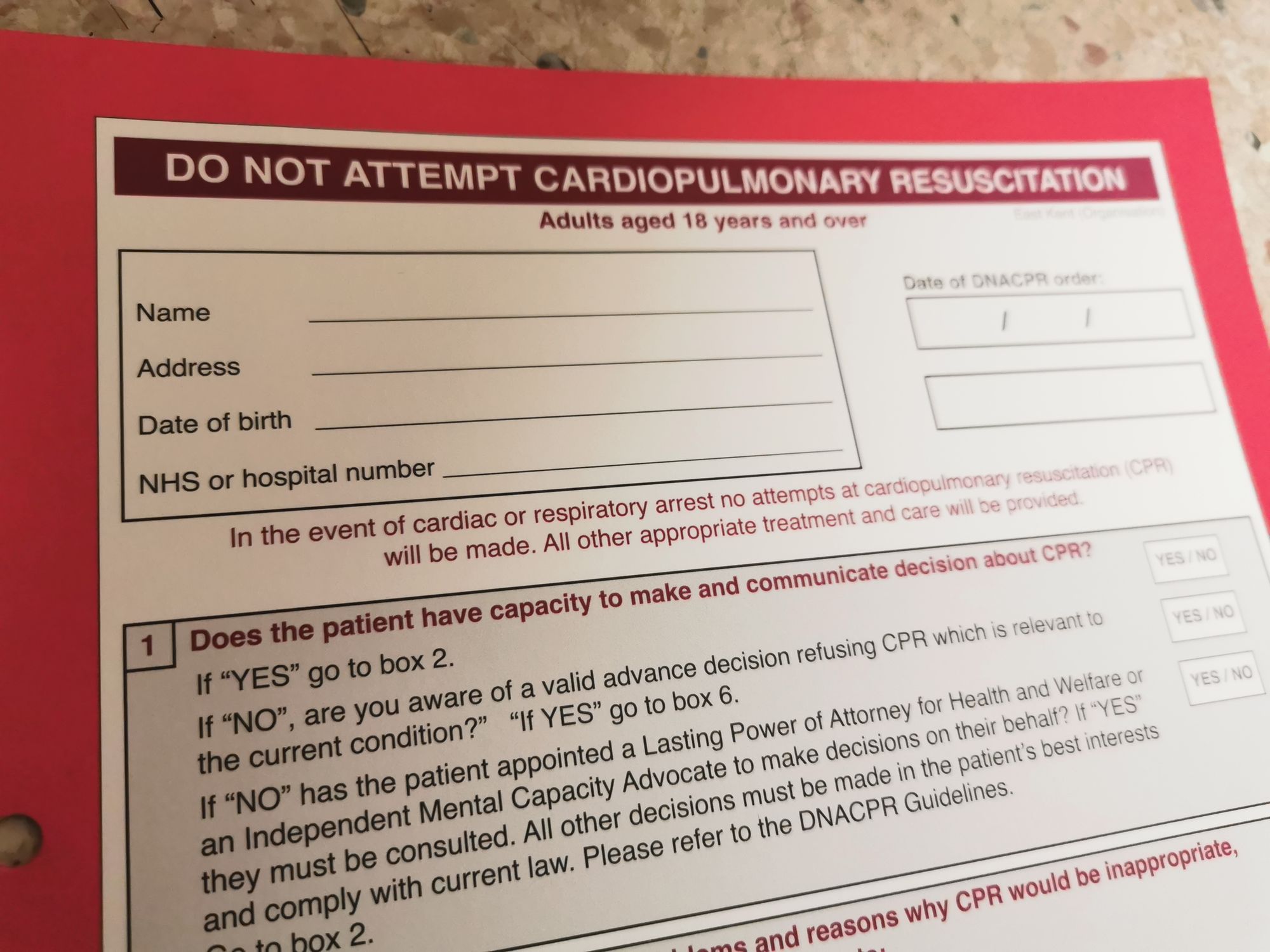
A do-not-resuscitate (DNR) order is a kind of breakthrough regulation. Having a DNR order indicates you don’t desire treatments like cardiopulmonary resuscitation (CPR) utilized on you if your heart or breathing quits.
Under regular circumstances, healthcare providers will certainly do everything they can to attempt to conserve your life. That can include mouth-to-mouth resuscitation and various other therapies like:
- Intubation and putting you on a ventilator (mechanical ventilation)
- Utilizing a defibrillator to attempt and “shock” your heart into a normal rhythm
Yet what happens if you’re currently extremely ill or have an incurable illness? That’s where DNR orders come in. They can assist if you want any of the following:
- To limit any discomfort or experiencing you have as you near death
- To preserve your self-respect at the end of your life
A doctor normally creates a DNR order after a discussion with you and/or any kind of lawful decision-makers or loved ones you want present. Depending on the regulation where you live, a DNR is only valid if created by a medical professional (MD or DO) or one more specified kind of medical care expert.At site Arizona DNR Order from Our Articles
Ideally, you would certainly have a do-not-resuscitate order prepared prior to an emergency situation happens. The order tells healthcare providers not to try mouth-to-mouth resuscitation if your heart stops defeating or your breathing stops. The carrier who creates the order includes it to your clinical graph for various other doctor to see.
What are the types of DNR?
A lot of the time, a DNR refers to CPR and relevant therapies like using a defibrillator. But there are other, comparable orders that are more specific. And occasionally, the regulation where you live can affect the kinds of offered DNRs. Some instances of different DNR kinds include:
- Do not attempt resuscitation (DNAR). This is basically the like a DNR. However some places or medical care companies use this term rather.
- Allow Natural Fatality (AND). This lets companies use treatments that keep you as comfortable as possible. The goal right here is to stop suffering as you die.
- Do not intubate (DNI). This allows service providers understand you wouldn’t want positioning of a breathing tube or to be on a ventilator if you can not breathe by yourself.
- Specified DNRs. These are customized DNRs. For example, you might specify that you don’t want CPR. Yet healthcare providers can still utilize various other treatments, like a defibrillator, to try to conserve your life.
- Convenience care orders. These may define what type of care suppliers can utilize near completion of your life. They likewise interact your wishes in the context of maintaining you as comfy as feasible as your life finishes.
There could be other versions or sorts of DNRs offered depending upon where you live and your scenario. Your healthcare provider can inform you much more about your alternatives.
If CPR saves lives, why would certainly any individual want a DNR order?
Some individuals with incurable illnesses or significant clinical problems could not wish to undertake mouth-to-mouth resuscitation, even if that implies they could die consequently. Determining to have a DNR order can equip you by making you feel much more in control of your very own life.
Although CPR can save lives, it isn’t 100% effective. And for individuals who are very ill or have certain conditions, the chances of success can be much lower. It’s additionally typical to have agonizing injuries from mouth-to-mouth resuscitation, like damaged ribs and sternum cracks.
Extra Common Questions
Exactly how do I make my dreams learnt about a DNR?
Talk with your health care service provider or the major company leading your care team. Your doctor will talk about the advantages and dangers of mouth-to-mouth resuscitation and related types of treatment. This is suggested to be a frank conversation with you concerning just what you desire. Informed approval is essential in these discussions so you can choose based upon all the facts and your individual choices. And if you need to consider it or discuss it further with loved ones, it’s all right to inform your supplier that. It’s likewise typical for doctor to ask about a DNR order during office visits or when you’re confessed to the hospital.
Once you have a DNR, your supplier can file it with your medical record. They can likewise provide you a duplicate to carry with you. You can additionally find wearable clinical ID arm bands that inform very first responders that you have a DNR.
What happens if I can’t decide about a DNR myself?
If you’re subconscious due to an ailment or injury, or incapable to make an educated choice for any other factor, you won’t have the ability to mention your dreams about a DNR. If you already have a DNR and it’s in your medical record, your enjoyed ones can’t bypass it.
If you do not yet have a DNR, you might name a person to represent you, such as your power of attorney or various other health care proxy. If you have not named a healthcare proxy, a family member can sometimes make medical choices for you when you’re not able to make decisions yourself. Which relative can choose for you differs by state.
What happens if I alter my mind after a DNR order is written for me?
You always deserve to change your mind when it come to your DNR. If you do transform your mind, inform your doctor quickly so they can keep in mind the adjustment in your medical record. You must likewise quit lugging any wearable items like ID arm bands and destroy any kind of paper copies you have.
Tell your liked ones and other caregivers that you have actually changed your mind and your DNR is no more what you desire.
What takes place if you resuscitate a DNR patient?
DNR orders only apply to doctor who understand (or must fairly know) about it. If a healthcare provider doesn’t know about your DNR or there’s a miscommunication, they won’t necessarily enter into difficulty.
Yet if your doctor resuscitates you and they find out about your DNR, they can deal with legal effects. They can likewise face repercussions if they don’t find out about your DNR as a result of oversight.
Nonmedical experts can not get involved in any type of type of legal trouble for performing CPR on an individual with a DNR. If you’re learnt mouth-to-mouth resuscitation, you must try it on a person experiencing cardiac arrest. Yet if a situation arises where you understand that the individual has a DNR, you ought to value their wishes not to be resuscitated.
How does a DNR affect my care if I’m having surgical treatment?
If you have a DNR and need to go through surgical procedure, be sure to speak about your DNR with your cosmetic surgeon and your anesthesiologist. They can tell you a lot more regarding exactly how your DNR may influence any kind of part of your surgery or procedure.
Sometimes, your anesthesiologist, cosmetic surgeon or both may ask you to suspend your DNR during your surgical treatment. That’s since some of the regular parts of surgery, particularly basic anesthetic, may contravene your DNR. If you have any type of questions about this, do not be reluctant to ask your specialist or anesthesiologist. Making certain they understand your concerns is a vital part of making certain you obtain care that aligns with your demands and dreams.